TL;DR
- LLM evaluation scores a single model response; agent evaluation scores the entire multi-step task an agent completes
- Automated LLM-as-judge scoring misses reasoning failures that only show up when you review the full trajectory
- Most teams shipping agents need both eval types running, not one instead of the other
- Human review layered on top of automated scoring catches what pure automation misses in either eval type
In 2024, a British Columbia tribunal found Air Canada liable for negligent misrepresentation after its website chatbot told a customer he could apply for a bereavement fare after he had already flown. That policy did not exist. The airline argued the chatbot was a separate entity and not its responsibility. The tribunal disagreed and ordered Air Canada to pay damages.
That is what an LLM evaluation failure looks like in production: one response, stated with total confidence, that was simply wrong. A basic accuracy check on that single reply would have caught it before it ever reached a customer.
Now picture the same failure one layer deeper. An agent built to handle refunds gives a customer the correct amount, but only after it calls the refund API before confirming the order number, retries twice, and burns through steps nobody approved. Every individual message in that exchange can still read as accurate and well-formed. The problem isn't in any single response. It's in the sequence of decisions that got there, and a response-level check has no way to see it.
The two get used interchangeably in vendor content and internally on teams that are still building out their eval stack, which causes real problems: teams either over-invest in the wrong layer or assume one eval type covers a gap the other one exists to close. This piece breaks down what each one actually measures, where they overlap, and how to tell which one your system needs. If you're already deep in agent-specific methodology, our practical guide to agent evaluation covers the three-tier framework in more depth.
Let's get into it.
What LLM evaluation actually measures
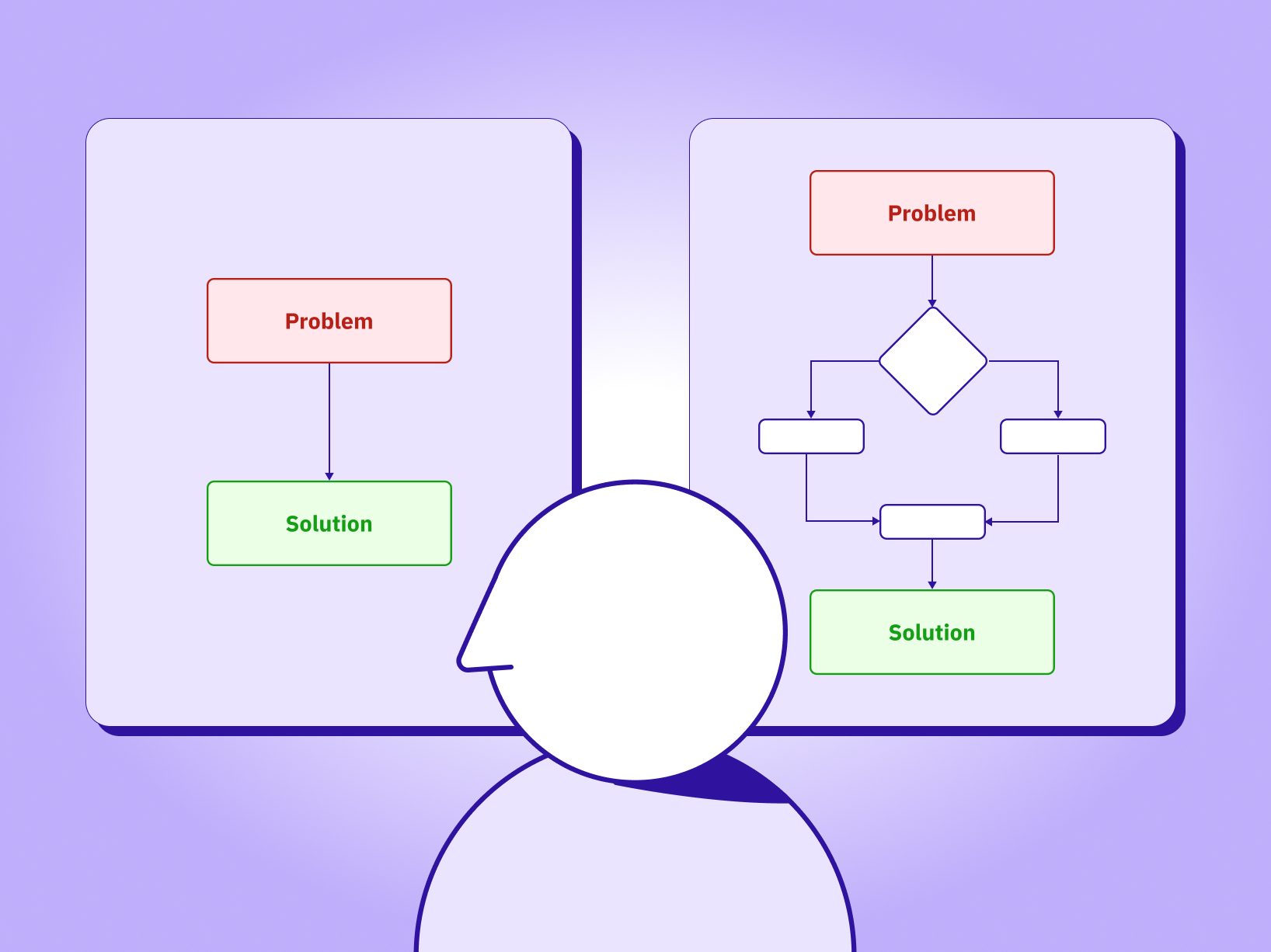
LLM evaluation checks one thing: is this specific output, in response to this specific input, good? The model gets a prompt, produces a response, and that response gets scored against a set of criteria before anything else happens with it.
For an LLM evaluation exercise, "good" usually breaks down into a few dimensions: does the answer match the facts it's grounded in, is it relevant to what was asked, is the tone appropriate, and does it avoid saying anything unsafe or fabricated. None of that requires knowing what happens next. A single Q&A pair is a complete unit of evaluation.
This is the layer most teams build first, because it maps cleanly onto how LLMs get tested during fine-tuning and RLHF: score the output, compare it to a reference or a rubric, move on. It's also the layer most eval tooling on the market was originally built for, before agentic workflows made single-turn scoring insufficient on its own.
What agent evaluation actually measures
Agent evaluation checks whether the agent got to the right outcome the right way, across however many steps that took. An agent plans, picks tools, calls APIs, reads the results, and often revises its own plan mid-task. Any of those steps can go wrong even when the final response reads perfectly.
This is why agent evaluation looks at the full trajectory instead of the final message alone: which tools got called, in what order, with what parameters, and whether each step actually moved the task forward. A support agent that eventually gives the customer a correct refund amount, but only after calling the wrong internal API twice and burning through unnecessary latency and cost, passes an output-only check and fails a trajectory check. Only one of those checks would have caught the refund-before-verification problem in the opening example.
Pro tip: If your eval suite only ever looks at the agent's last message, you are running LLM evaluation on an agent system, not agent evaluation. The two are not interchangeable even when the same model powers both.
LLM evaluation vs. agent evaluation: the core differences
Laid out side by side, the difference comes down to what unit gets scored and what kind of failure each approach is built to catch.
Comparison: LLM Evaluation vs. Agent Evaluation
The practical consequence: an LLM evaluation score tells you whether the model can produce good answers. An agent evaluation score tells you whether the system built around that model can be trusted to act on its own. Enterprises deploying agentic workflows need the second answer more than the first, but they can't get it without also running the first.
Not sure which eval type your system needs?
Our team can walk through your current agent or LLM setup and point out where the gaps likely are. Talk to the TaskMonk team about your evaluation workflow.

Metrics that matter for each
The metrics diverge because they're measuring different things, and picking the wrong one for the job produces a score that looks precise but tells you nothing useful.
LLM evaluation metrics
Accuracy and faithfulness measure whether the response is factually grounded in the source material it was given, which matters most for RAG and document-grounded use cases.
Relevance measures whether the response actually addresses what was asked, separate from whether it's true.
Hallucination rate tracks how often the model states something with no basis in its inputs.
None of these require more than one turn of conversation to evaluate.
Agent evaluation metrics
ask completion rate is the blunt top-line number: did the agent finish what it was asked to do.
Tool call accuracy checks whether the agent picked the right tool and passed correct parameters, which is where a lot of silent failures live.
Reasoning quality looks at whether the plan the agent formed made sense given the information it had, not just whether the outcome happened to work out.
Step efficiency and cost per task matter because an agent that reaches the right answer through six unnecessary tool calls is burning latency and spend that a well-built agent wouldn't.
Most teams pull these metrics from a mix of purpose-built eval frameworks and annotation tooling.
If you're evaluating LLM outputs specifically, our roundup of HITL annotation tools for LLM evaluation covers where human review fits into that stack.
Pro tip: Track tool call accuracy separately from task completion rate. An agent can complete a task despite calling the wrong tool first and self-correcting, and that pattern will keep showing up in production if the eval never flags it.
Where human review fits into both
Automated scoring, whether it's LLM-as-judge or a reference-based metric, is fast and cheap, which is exactly why teams lean on it. It's also got blind spots that don't announce themselves. LLM judges tend to favor longer, more confident-sounding responses regardless of accuracy, and they routinely miss domain-specific errors that a subject-matter reviewer would catch in seconds.
Human review closes that gap, but only if it's structured rather than ad hoc. And that happens with a structured workflow orchestrated via a robust platform. Here is an example of how that plays out:
TaskMonk's QC layer gives teams a few ways to do this depending on how much ambiguity is in the judgment call. Maker-Checker works when a reviewer just needs to approve or reject an automated score. Majority Vote, with a configurable Consensus Percentage, routes a set share of eval judgments to multiple reviewers and takes the majority call, which is useful for genuinely subjective calls like tone or helpfulness where one reviewer's read isn't enough.
Golden Data plays a specific role here too: a human-labeled golden batch, blind to the reviewer, becomes the reference set that calibrates whether your LLM-as-judge setup is actually agreeing with human judgment or just sounding confident. If Golden Accuracy on the judge model drifts, that's a signal to recalibrate before trusting the automated scores at volume.
Chat-style evaluation and response ranking specifically benefit from a purpose-built review interface rather than a spreadsheet. TaskMonk's Dynamic Field, which renders as an OptionedMessage widget, is built for exactly this: reviewers see the conversation or agent trace and rank or score responses inline, without an engineering team building a custom UI first. It's the same field type used across our text annotation tooling for RLHF and preference-data work.
What changes at enterprise scale
A small eval suite on a few hundred examples can run informally. At enterprise volume, the constraints that matter shift toward things a lot of eval frameworks weren't built to handle: who's allowed to see the eval data, whether a disputed judgment is traceable after the fact, and whether human review can scale without becoming the bottleneck.
Agent traces and eval transcripts often contain the same sensitive content as the production system they came from: customer PII, internal documents, regulated financial or clinical detail. Field-level access control lets teams restrict who can view or edit specific output fields per execution level, so a reviewer scoring response quality doesn't need visibility into fields outside their remit.
Disputed judgments also need a paper trail in regulated industries, not a silent overwrite. For example, TaskMonk's Rejection/Rebuttal workflow keeps a full history when a reviewer rejects an eval score and the original scorer disagrees: the rejection reason, the rebuttal, and every round after that stay attached to the task rather than getting lost when someone resolves the disagreement.
But human review volume doesn't scale on its own. Teams that try to keep eval review entirely in-house often find it's the first thing that gets deprioritized when the review queue grows faster than headcount. That's where a managed annotator pool, rather than pure platform access, becomes the difference between an eval process that holds up at 10x volume and one that quietly stops running.
Building an RLHF pipeline alongside your eval stack?
Human review for evaluation and human feedback for fine-tuning often run through the same reviewer pool. See our guide to RLHF annotation platforms for how teams structure both.
Do you need both?
If you're shipping a single-turn feature like a summarizer, a classifier, or a chatbot that answers in one pass, LLM evaluation alone is probably sufficient. There's no multi-step trajectory to assess because there isn't a multi-step process.
The moment your system plans, calls tools, or takes more than one action per user request, you need agent evaluation layered on top of LLM evaluation, not instead of it. The model inside the agent still needs to be evaluated on whether individual outputs are accurate. The system wrapping that model needs to be evaluated on whether it acts on those outputs correctly.
A practical way to sequence this without over-building your eval stack on day one: start with an output-level check on the model's responses, add a trajectory-level check once the agent is calling more than one tool per task, and use a Disagreement Score across your human reviewers to flag which judgment calls are genuinely ambiguous before you scale either eval type. Ambiguous cases are exactly where it's worth routing through Clarification Flow to tighten the eval spec before more volume goes through it, rather than after.
Still scoping your eval stack?
Our breakdown of HITL annotation tools for LLM evaluation covers where automated scoring stops and human review needs to start.
How TaskMonk handles LLM and agent evaluation
Most teams end up choosing between two flawed setups: automate everything and accept the blind spots, or review everything by hand and accept that it won't scale. TaskMonk is built for the layer in between, structured human review that sits on top of automated scoring for both single-turn and multi-step evaluation work.
Affinity-based reviewer routing: Evaluation judgment calls often need a reviewer who actually knows the domain, not just anyone in the queue. Predefined Affinity routes eval tasks in a given category to reviewers with the matching expertise; Random Affinity keeps a reviewer consistent across a whole eval run once they're assigned, so the same judgment standard gets applied throughout instead of shifting between reviewers mid-batch.
Clarification Flow: When a reviewer hits an eval case the spec doesn't clearly cover, they can flag it and get an answer from a dedicated Clarifier role before scoring, instead of guessing and creating an inconsistent judgment that has to be caught and fixed later.
Full audit trail on disputed scores: The Rejection/Rebuttal workflow covered above isn't just a compliance checkbox. It means a disputed eval judgment has a documented reason attached to it, which is what turns a one-off disagreement into a pattern you can actually act on.
And we don’t say this lightly without getting ourselves in the trenches;
TaskMonk has processed 480M+ tasks across 6M+ labeling hours, supports 10+ Fortune 500 teams, and holds a 4.6/5 rating on G2.
See where your eval process has blind spots.
If you want to know whether your current LLM or agent eval setup would catch what an automated-only suite misses, book a demo with the TaskMonk team and run a sample of your own eval data through the platform.
Conclusion
The cost of confusing these two eval types doesn't show up in a benchmark score. It shows up in production, when an agent that passed every response-level check takes an action nobody would have approved if they'd seen the reasoning behind it.
Teams that get this right don't pick one eval type and stop. They run LLM evaluation on the model's outputs, agent evaluation on the system's decisions, and structured human review on the judgment calls neither automated layer can make alone.
If your system only ever acts in one step, evaluate the step. If it acts in several, evaluate the path it took to get there. Most teams building agents today need both, and the sooner that's built into the eval stack, the fewer surprises show up after launch.
Frequently Asked Questions
How is an LLM different from an agent?
An LLM produces a single response to a single prompt. An agent uses one or more LLMs inside a system that plans, calls tools, and takes multiple actions to complete a task. Every agent has at least one LLM inside it, but not every LLM deployment is an agent. That distinction is exactly why the two need different evaluation approaches.
What is LLM evaluation?
LLM evaluation is the process of scoring a model's output against criteria like accuracy, relevance, faithfulness to its source material, and safety. It happens at the level of a single input-output pair, using reference-based scoring, LLM-as-judge methods, or human review, often some combination of the three.
What is the difference between LLM evals and benchmarks?
A benchmark is a fixed, public test set used to compare models against each other on standardized tasks. An LLM eval is usually specific to your own use case and data, built to answer whether your model performs well on the problems your product actually faces. Benchmarks are useful for picking a base model. Evals are what tell you whether that model works for you once it's in production.
Is ChatGPT an agent or an LLM?
It depends on the mode. A plain conversational exchange with ChatGPT is LLM behavior: one prompt, one response. When it browses the web, runs code, or chains multiple tool calls to complete a task, it's operating as an agent, and that specific interaction would need agent-style evaluation to assess properly.
Do you need separate teams for LLM and agent evaluation?
Not necessarily separate teams, but you do need eval workflows that are actually built for each layer rather than one generic rubric stretched to cover both. Smaller teams often have the same reviewers handle both, using different scoring criteria and interfaces for output-level checks versus trajectory-level ones. What matters is that the workflows are distinct, not who runs them.
Can automated scoring alone handle agent evaluation?
For high-volume, low-ambiguity checks like whether a required tool was called at all, yes. For reasoning quality, whether the agent's plan actually made sense given its context, automated scoring alone tends to miss cases that a human reviewer catches quickly. Most production agent-eval setups use automation for scale and human review for the judgment calls automation gets wrong often enough to matter.